-
stuart-slider-8-25.jpg
-
pbs-slider-8-241.jpg
-
pds-garden.jpg
-
math-tutor-slider-5-23.jpg
-
notre-dame-schools-slider-4-24.jpg
-
pcc-slider-7-23.jpg
-
bridge-academy-flag-pic.jpg
-
lewis-slider-2-21.jpg
-
pf-slider-9-24.jpg
-
fasp-slider-8-23.jpg
-
ywca-slider-8-25.jpg
-
princeton-mont-schools-slider-5-23.jpg
-
cedar-hill-slider-8-25.jpg
-
apple-slider-8-25.jpg
-
pjs-slider-6-23.jpg











Princeton NJ Schools Press Releases

The Pennington School Students Obtain Patent for Water Filtration System
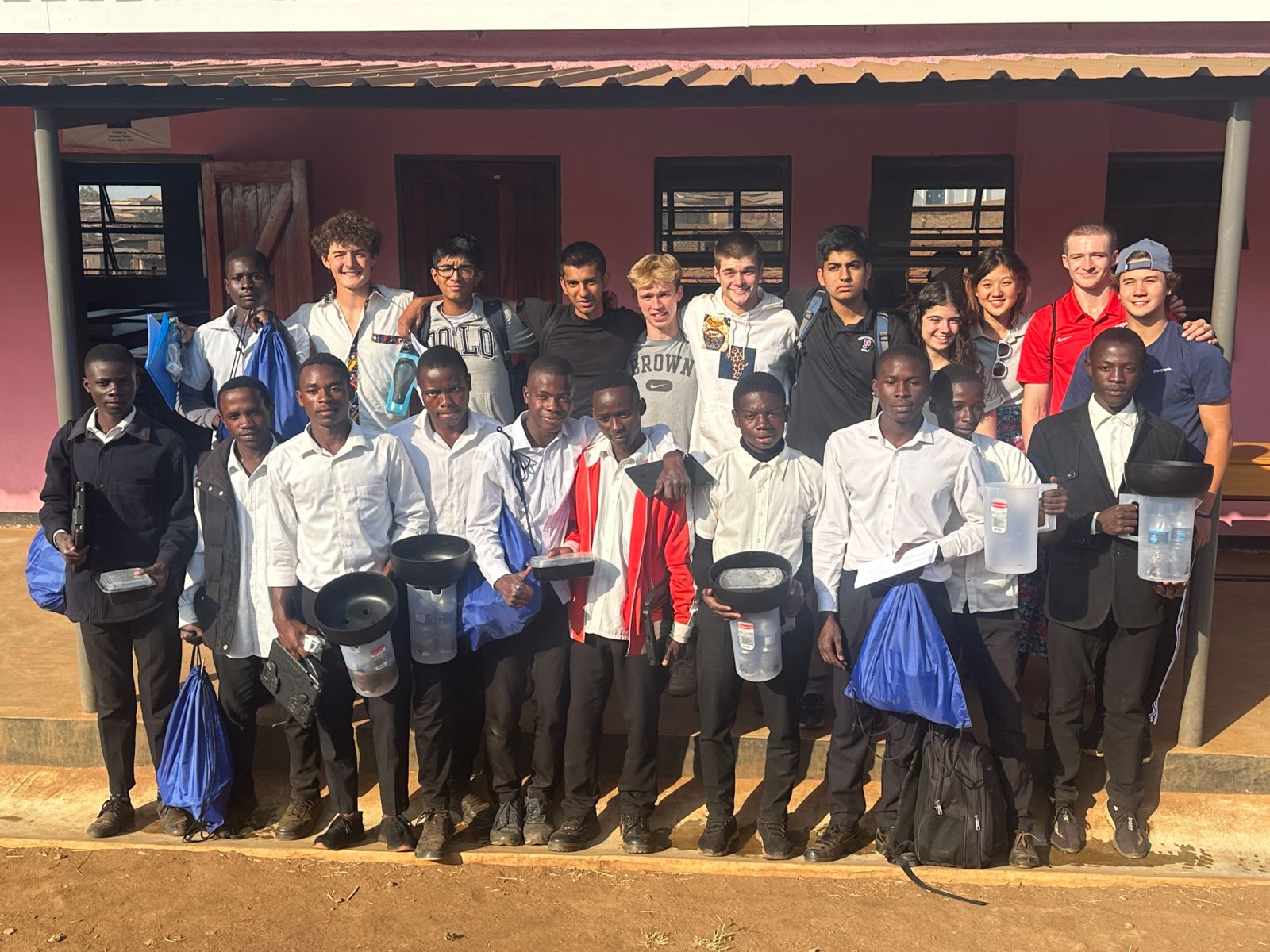
Students at The Pennington School, assisted by a team of attorneys from the law firm Haynes Boone, recently obtained a United States design patent for a student-developed water filtration system, the second patent the student team has obtained as they seek to improve living conditions for refugees at the Dzaleka camp in Malawi. The “Better Kitchen Sink” project, one of several that students are working on as part of Pennington’s Applied Science Certificate program, obtained the patent with the pro bono assistance of Counsel Sharon Crane and Partner Vera Suarez from Haynes Boone.
The new patent, granted on February 24, 2026, protects the ornamental design of the
filtration system, which was created to help address water scarcity challenges in Malawi.
Developed by students at The Pennington School in collaboration with students and residents in
the Dzaleka refugee camp, the filtration system is designed for use in and around Dzaleka,
where residents have limited access to clean water and often must walk long distances to
collect it. The device allows users to filter and reuse water for washing dishes and clothes,
helping families extend their limited daily water supplies.
The patented design features a funnel-like structure that attaches to commonly available plastic
bottles. The system uses layers of locally sourced materials in Malawi, including cotton, gravel, and sand, to filter out debris before water flows into a collection container. When paired with a small amount of sodium hypochlorite, the filtered water can also be made potable.
The system has been tested within the refugee camp and distributed to users, who report
meaningful improvements in their ability to conserve water for household use. Students are
continuing to refine the design to increase the volume of water that can be filtered at one time.
“This project reflects the very best of what student innovation can achieve when paired with
real-world purpose,” said Crane, who has advised the students throughout the patent process.
“These students identified a critical need, worked collaboratively across borders, and developed
a practical solution that can make a measurable difference in people’s daily lives. We are proud
to support their efforts.”
The design patent builds on Haynes Boone’s ongoing partnership with The Pennington School, including last year’s successful effort to secure allowance of a United States design patent for a reusable menstrual pad, also developed by students in the Applied Science program.
To date, more than 18,000 WISSP pads have been distributed in Malawi, and more than 175
girls have completed the program’s “Learn to Sew” initiative, which teaches teenagers how to
produce and maintain the reusable product. The menstrual health initiative has supported more
than 1,600 tailors, seamstresses, sellers, and beneficiaries, helping girls remain in school during
their menstrual cycles.
In addition to the filtration system and menstrual health work, The Pennington School’s students
continue to expand their impact. Last year, the team developed a soap-making process using
materials available in Malawi and piloted a soap-making and selling training program for teen
refugees at the camp.
Susan Wirsig, Director of the Applied Science Certificate Program at The Pennington School, said, “I’m so proud of this team and its past members, many of whom have gone on to study STEM and design fields in college, for their perseverance in continuing to seek solutions when challenges arose, and for their deep commitment to developing a water solution for a community in Malawi.” The group travels to Malawi each June to see their work put into action on the ground and to solicit feedback from the community at Dzaleka.
The filtration system has received international recognition, including top placements in global
innovation competitions, further highlighting the students’ commitment to practical, community-
driven solutions. “This patent is another milestone in a much larger journey,” Suarez said. “These students continue to listen, learn, and innovate in ways that demonstrate both technical skill and extraordinary compassion.”
To learn more about the program, please visit The Pennington School’s website at www.pennington.org.
The Pennington School is an independent coeducational school for students in grades 6 through 12, in both day and boarding programs. The curriculum is college preparatory, with an emphasis on individual excellence, fostering the development of the whole student through academics, athletics, community service, and the creative and performing arts.